





BUDGET 2026: PRESIDENT TINUBU EARMARKS N5.41tn FOR SECURITY...
President Bola Tinubu’s ₦5.41 trillion security allocation in the 2026 budget underscores security as the foundation of national development. If effectively managed with accountability, legal reforms, and people-centred strategies, the investment can restore peace, revive agriculture and trade, reduce poverty, and deliver tangible benefits to Nigeria’s poor and vulnerable populations. On a nutshell, Tinubu’s ₦5.41tn 2026 security budget prioritises peace as the bedrock of development, aiming to curb terrorism, revive economic activity, protect the poor masses, and drive sustainable national growth through accountable security spending.
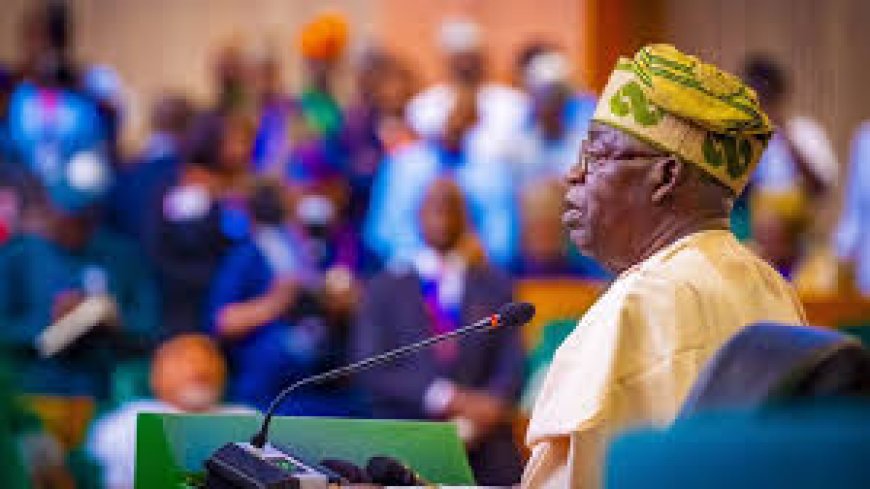
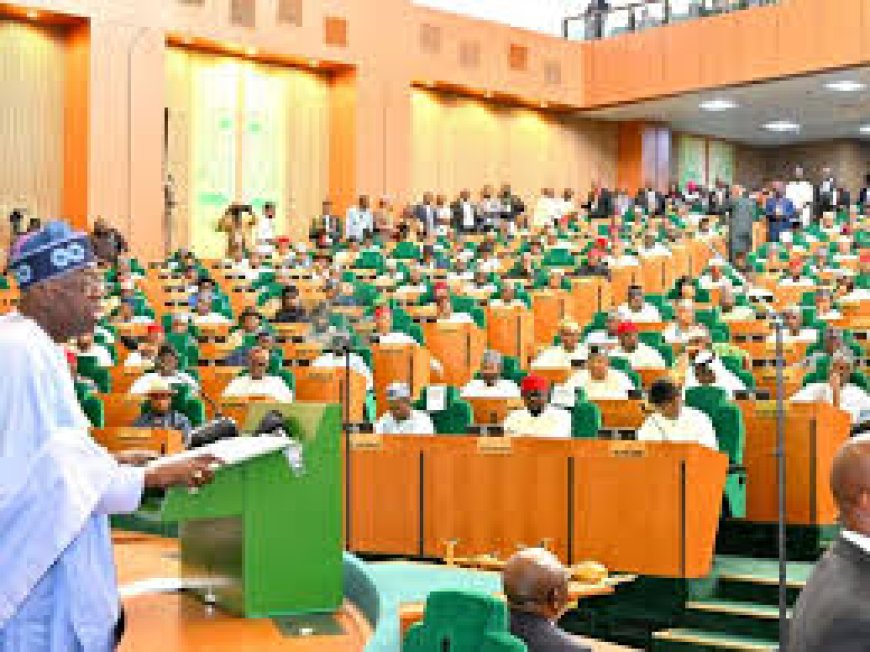
President Bola Tinubu has proposed N5.41 trillion for security in the 2026 budget, making it the single largest allocation; its effective change for the vulnerable and poor masses
President Asiwaju Bola Tinubu’s proposal of ₦5.41 trillion for defence and security in the 2026 national budget marks a decisive statement of priority by the Federal Government. As the single largest allocation in a ₦58.18 trillion Appropriation Bill, the move underscores a long-held position of the administration: without security, development cannot take root. However, for this investment to translate into effectiv

e positive change, especially for the poor and vulnerable masses, it must go beyond military hardware and enforcement to deliver peace, livelihoods, justice and hope.
Security as a Gateway to Economic Relief for the Poor
For millions of Nigerians living in rural and peri-urban communities, insecurity is not an abstract policy issue, it is a daily reality. Farmers abandon fertile lands due to bandit attacks, traders shut down markets for fear of kidnapping, and transporters avoid entire corridors plagued by violence. The poor suffer the most because they lack alternatives.
If the ₦5.41 trillion security allocation successfully restores peace in farming belts, highways, forests, and waterways, the first beneficiaries will be ordinary Nigerians. Safe farmlands mean increased food production, lower food prices, and improved nutrition. Secure roads revive trade, reduce transport costs and make basic goods more affordable. In this sense, security spending becomes indirect social welfare, easing the cost-of-living burden on the masses.
Accountability: Turning Spending into Real Safety
President Tinubu’s insistence that security spending must deliver “clear accountability for outcomes” is critical. For too long, large defence budgets have failed to produce commensurate safety for citizens. If properly enforced, performance-based accountability can ensure that funds are directed toward intelligence gathering, community policing, modern surveillance, welfare of security personnel and rapid response systems, rather than waste and duplication.
When security agencies are better trained, motivated and equipped, abuses reduce and trust improves. This is especially important for the poor, who are often caught between violent criminals and heavy-handed enforcement. Security that protects human dignity is security that empowers the masses.
Reclassification of Armed Groups: Closing the Gaps
The decision to classify bandits, kidnappers, militias, violent cults and their financiers and enablers as terrorists represents a significant policy shift. This tougher legal framework can dismantle the networks that profit from insecurity, networks that often exploit poverty, unemployment, and weak governance.
By criminalising not just the gunmen but also their sponsors and political or community protectors, the state sends a strong signal that insecurity will no longer be tolerated as a business model. If implemented fairly and transparently, this approach can break the cycle where the poor are recruited as foot soldiers while the powerful escape accountability.
From Guns to Jobs: Security as a Foundation for Opportunity
Security spending must also support non-kinetic strategies, job creation, rehabilitation and reintegration. Many youths drawn into armed groups are products of extreme poverty and exclusion. A security architecture that combines force with education, skills acquisition, and economic inclusion can transform former conflict zones into centres of productivity.
When peace returns, private investment follows. Small businesses reopen, schools function, health centres operate, and humanitarian aid reaches those who need it most. In this way, security becomes the foundation upon which education, healthcare, and infrastructure can finally deliver results for the poor.
A Test of Impact, Not Just Intent
President Tinubu is right that “security remains the foundation of development.” Yet history shows that budgets alone do not secure nations' results do. For the poor masses to feel the impact of this ₦5.41 trillion allocation, Nigerians must see safer communities, cheaper food, freer movement, and renewed economic activity.
If this security investment is transparently managed, people-centred, and firmly linked to social and economic recovery, it can mark a turning point, where national security policy no longer serves only the state, but actively lifts the burden of poverty and fear from ordinary Nigerians.
What's Your Reaction?
 Like
0
 Dislike
0
 Love
0
 Funny
0
 Angry
0
 Sad
0
 Wow
0