





She Beat the World, Nigeria Gave ₦200,000 – A Story of Brilliance and Tokenism: The Tale of Nafisa Abdullahi Aminu
A Nigerian teenager, Nafisa Abdullahi from Yobe State, stunned the world by winning the TeenEagle Global Finals in London, beating over 20,000 contestants from 69 countries to emerge as the World Best in English Language Skills. In recognition, the Federal Government gifted her ₦200,000, while the Atiku Abubakar Foundation offered scholarships and the Yobe State Governor promised further honors. Her story has inspired nationwide pride, showing that brilliance can emerge from anywhere when talent is nurtured, and proving that Nigerian youths can excel on the global stage despite systemic challenges. Yet the modest cash award has also sparked debate about Nigeria’s priorities. Many critics argue that rewarding global excellence with a token amount reflects the government’s symbolic approach to education rather than genuine investment. While Nafisa’s achievement is a beacon of hope, it also exposes the imbalance in how Nigeria values entertainment and sports over intellectual success. Her story is both a moment of celebration and a wake-up call: if the nation wants 100,000 more Nafisas, it must move beyond token gestures and commit to systemic investment in schools, teachers, and youth development.

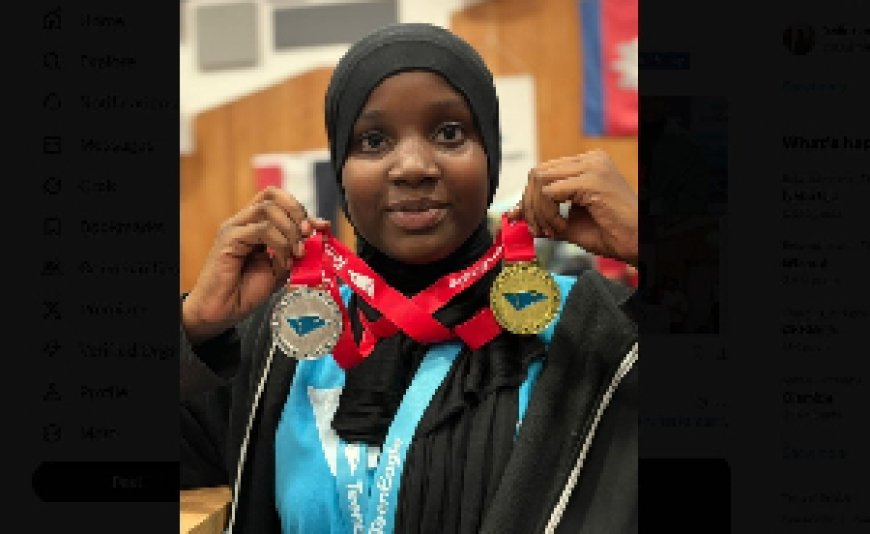
In a country where youth potential is often overshadowed by systemic challenges, a recent story has sparked both celebration and soul-searching. The Federal Government of Nigeria awarded ₦200,000 to Nafisa Abdullahi, a teenager from Yobe State, after she emerged victorious at the TeenEagle Global Finals in London. Competing against over 20,000 participants from 69 countries, Nafisa was crowned the World Best in English Language Skills, a feat that has placed Nigeria on the global academic map.
The story, which quickly spread across news outlets and social media, is not just about a prize or a contest. It is a narrative about talent, recognition, national priorities, and the complex relationship between government and youth. This blog post delves into Nafisa’s journey, the moral lessons it carries, and the reactions, both joyful and critical, that her recognition has sparked.
The Story: A Nigerian Teen Shines on the Global Stage
In August 2025, 17-year-old Nafisa Abdullahi, a student at Nigerian Tulip International College, Yobe State, stunned the world by winning the TeenEagle Global Finals in London. Her mastery of English language skills—covering reading comprehension, vocabulary, critical analysis, and public expression—earned her first place over contestants from advanced education systems in the US, UK, Canada, India, and South Africa.
Nafisa’s triumph was not hers alone. Her schoolmate, 15-year-old Rukayya Muhammad Fema, also made Nigeria proud by clinching the debate championship prize at the same competition. Together, these two teenagers symbolized brilliance blossoming from unexpected corners of Nigeria.
Back home, news of their victory stirred jubilation. Nigerians celebrated the girls’ determination, talent, and courage. For a country where education often struggles against underfunding, insecurity, and systemic neglect, their victory offered a refreshing moment of hope.
Then came the recognition. On August 28, 2025, the Minister of Education, Dr. Tunji Alausa, presented Nafisa with a ₦200,000 cash gift in Abuja. The event was attended by education stakeholders and media personnel. The minister described her as a “beacon of hope,” emphasizing that her brilliance belonged to all Nigerian children.
Other acknowledgments soon followed:
- The Atiku Abubakar Foundation awarded full scholarships to Nafisa, Rukayya, and a fellow Yobe student, Khadija Kalli.
- The Yobe State Governor, Mai Mala Buni, promised a state-wide celebration to honor the winners.
The recognition was layered—federal, state, and private. But it also opened the door to an important debate.
Public Reactions: Celebration, Criticism, and Reflection
The cash award of ₦200,000 generated mixed reactions among Nigerians.
Pride and Celebration
Many Nigerians applauded the Federal Government for recognizing Nafisa’s brilliance. Educators praised the gesture as a step in the right direction. For once, the spotlight was on academic excellence rather than entertainment or sports. Social media was filled with congratulatory messages, and hashtags like #NafisaShines trended as Nigerians proudly shared her story.
One teacher commented online: “At last, we are celebrating brains, not just football goals or dance competitions. This is what our children need to see.”
Criticism: Is ₦200,000 Enough?
But not everyone was satisfied. Some argued that ₦200,000 (around $250 USD) is far too modest for a teenager who has beaten the world. Critics compared it to the millions spent on politicians’ allowances, parties, and sports celebrations.
A social media user wrote: “She won a global contest. We gave her less than the cost of a new iPhone. This is tokenism, not reward.”
Others pointed out that in countries like India or Kenya, winners of similar global competitions often receive scholarships, study opportunities abroad, or substantial cash awards. In contrast, Nigeria’s recognition felt inadequate.
The Bigger Picture
The debate soon shifted from Nafisa’s prize to Nigeria’s broader attitude toward education. Why does government lavish millions on sports teams and entertainers while giving academic achievers symbolic amounts? Why are schools in Yobe and elsewhere still struggling with dilapidated libraries, lack of internet, and underpaid teachers?
The ₦200,000 award, while appreciated, became a mirror reflecting deeper issues: underinvestment in education, lack of consistent policies for rewarding talent, and a culture that prioritizes short-term symbolism over long-term investment.
The Moral Lessons from Nafisa’s Story
Beyond the cash award, Nafisa’s journey carries powerful lessons for Nigeria.
1. Excellence Knows No Geography
Nafisa’s victory challenges stereotypes. She hails from Yobe, a state often associated with insecurity and educational challenges. Her success proves that brilliance exists everywhere, it only needs opportunity and nurturing.
2. The Power of Mentorship
Behind every success story is support. Nafisa and Rukayya were guided by dedicated teachers at their school, who went beyond the classroom to prepare them. This reminds us that when teachers are valued and supported, they can unlock a generation’s potential.
3. Resilience in the Face of Adversity
Nafisa’s achievement came despite systemic hurdles, limited infrastructure, social pressures, and an environment where academic excellence is not always celebrated. Her perseverance shows the resilience of Nigerian youth.
4. Language as Empowerment
Her mastery of English, showcased globally, reflects how language can bridge divides and amplify voices. In a diverse country like Nigeria, communication is not just about grammar—it is about unity, leadership, and influence.
5. Recognition Fuels the Journey
Even if modest, recognition matters. It validates effort and inspires others. But it must go beyond token gestures into meaningful investment.
Symbolism vs. Substance: The Federal Government’s Attitude
Nafisa’s award reveals a recurring pattern in Nigeria’s governance: symbolic recognition without structural follow-up.
On one hand, the government deserves credit for acknowledging her. In a political space dominated by bad news, this was a moment of pride. It showed a government willing to spotlight youth achievement.
On the other hand, the absence of a consistent national framework for rewarding academic excellence makes the gesture look arbitrary and reactive. Would the government have acted if social media hadn’t amplified Nafisa’s story? Will the next child who wins a math Olympiad or a global science fair also be recognized or ignored?
Without clear policy, recognition risks being sporadic and politically motivated.
What Nigeria Should Do: A Roadmap for Real Support
To turn moments like Nafisa’s into lasting impact, Nigeria needs more than cash gifts. It needs systemic reforms and long-term investment in youth potential. Here are five concrete steps:
- Establish a National Academic Excellence Awards Scheme
Like the National Sports Awards, this should recognize winners of international academic competitions with scholarships, mentorship, and sustained support. - Partner with Universities and Corporations
Create pathways for young achievers to access mentorship, internships, and future opportunities through collaboration with local and international institutions. - Upgrade Public School Infrastructure
From libraries to science labs, schools, especially in underserved regions, must be equipped to nurture talent. - Launch Merit-Based Scholarships
Ensure that no Nigerian student’s dream is cut short by financial limitations. International scholarships for global achievers should be institutionalized. - Promote Intellectual Heroes in the Media
Celebrate academic achievers with the same enthusiasm as sports stars. This cultural shift will inspire millions of young Nigerians to value education.
Conclusion: A Moment of Pride, A Call for Action
Nafisa Abdullahi’s victory is a triumph for Nigeria, a teenager from Yobe who rose above global competition and carried her country’s flag with pride. The federal government’s gift of ₦200,000, though symbolic, is a recognition worth noting. But it must also serve as a wake-up call.
If Nigeria is serious about building a future driven by knowledge, creativity, and innovation, it must move beyond symbolic gestures to systemic investment in education and youth empowerment.
As one Nigerian quipped online:
“We gave Nafisa ₦200,000 today. But if we invest ₦20 billion in our schools, we’ll have 100,000 Nafisas tomorrow.”
The choice before us is clear. Let us not allow Nafisa’s story to fade into a news cycle. Let it become a turning point and a reminder that in every classroom, in every town and village, there are young Nigerians ready to shine. All they need is recognition, opportunity, and support.
Her name should not just be remembered as a winner of a contest, but as a catalyst for change a reminder that Nigeria’s greatest wealth lies not in oil or politics, but in the brilliance of its youth.
What's Your Reaction?
 Like
0
Like
0
 Dislike
0
Dislike
0
 Love
0
Love
0
 Funny
0
Funny
0
 Angry
0
Angry
0
 Sad
0
Sad
0
 Wow
0
Wow
0